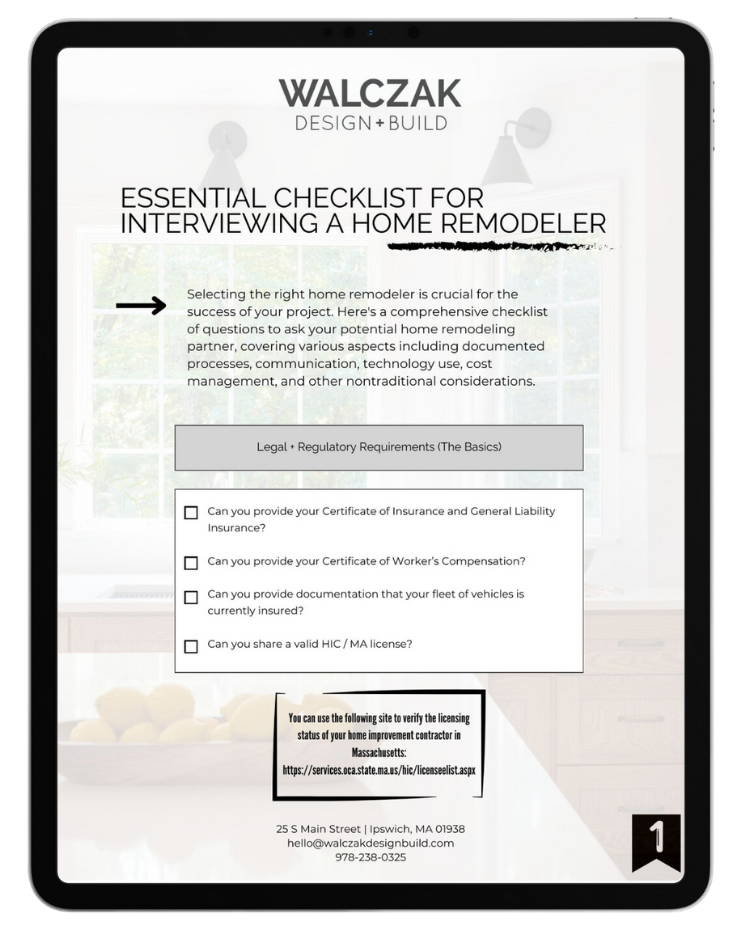
Who should I hire to help me plan and execute this project?
If you’re in the research phase of a home renovation for your North Shore home, this is often one of the first (and most confusing) questions.
Terms like contractor, general contractor, and design-build firm are often used interchangeably—but they represent very different approaches, responsibilities, and homeowner experiences. Understanding these differences early is especially important for large-scale, multi-room and high-touch renovations, where planning, coordination, and decision-making have a direct impact on cost, timeline, and overall experience.
This guide breaks down the most common renovation setups, what each typically covers, and which types of projects they’re best suited for—so you can make an informed decision based on your goals, not just assumptions.
Working With a General Contractor (GC)
A General Contractor is typically responsible for executing construction, not planning or designing the project.
What a GC Typically Manages
-
On-site construction and supervision
-
Scheduling and coordinating subcontractors
-
Executing work based on completed plans and specifications
-
Pulling permits once drawings are finalized
What the Homeowner Often Manages
For a full home remodel, homeowners working with a GC are commonly responsible for:
-
Hiring an architect and/or interior designer separately
-
Coordinating communication between designer and contractor
-
Finalizing layouts, details, and specifications
-
Selecting and ordering finish materials, fixtures, and appliances
-
Tracking lead times and resolving delivery issues
-
Making design decisions as conditions arise in the field
This approach can work well for homeowners who:
-
Want to be deeply involved in selections and sourcing
-
Prefer to manage decisions and logistics themselves
-
Have a more straightforward scope or already-completed plans
-
Are comfortable navigating risk, coordination gaps, and tradeoffs
It’s important to understand that while this path may appear more flexible upfront, responsibility—and risk—often remains with the homeowner when design decisions, budgets, and construction realities are managed separately.
Working With a Design-Build Firm
A design-build firm integrates planning, design, and construction into a single, coordinated team.
Rather than handing off responsibility between multiple parties, the same team is accountable from early feasibility through construction and warranty.
What a Design-Build Firm Typically Handles
Depending on the firm, this often includes:
-
Early feasibility and budget alignment
-
Architectural and interior architecture design
-
Interior design and material selection guidance
-
Construction planning and scheduling
-
Material sourcing, ordering, and tracking
-
Quality assurance of materials upon arrival
-
Installation coordination and trade oversight
-
Budget tracking and change management
-
Final walkthroughs and post-project warranty support
Because design and construction teams work together from the outset, decisions are made with constructability, cost implications, and sequencing in mind—not in isolation.
This integrated approach is one reason many firms that focus on complex, high-touch renovations (like that luxury kitchen you’ve been dreaming about!) choose the design-build model: it reduces guesswork, minimizes handoffs, and creates clearer accountability throughout the process.
Industry data from the Design-Build Institute of America consistently shows that residential design-build projects experience fewer change orders, improved schedule performance, and stronger alignment between expectations and outcomes—particularly on complex remodels.
Which Projects Are Best Suited for Design-Build?
Design-build is often a strong fit when:
-
The renovation involves multiple rooms or structural changes
-
Early planning and sequencing matter
-
Long-lead materials and custom components are involved
-
Homeowners want guidance rather than managing details themselves
-
Predictability and experience are as important as the final result
This model is not always the right solution for smaller, cosmetic projects where homeowners prefer to manage selections independently or keep professional services minimal. In those cases, a more traditional GC or trade-specific approach may be better aligned.
Choosing the Right Path for Your Renovation
When deciding who to hire, it helps to ask:
-
How complex is my project, really?
-
Do I want to manage decisions and logistics—or be guided through them?
-
How important is early cost clarity and schedule predictability?
-
What level of risk am I comfortable managing myself?
There’s no universally “right” choice—only the right fit for your project and priorities.
Understanding these models early allows you to choose a team that aligns not just with your budget, but with how you want to experience your renovation.
Considering a Design-Build Renovation?
If your project involves a complex renovation, multiple spaces, or thoughtful planning, and you’re curious whether a design-build approach might be the right fit, we invite you to take the next step.
👉 Schedule a consultation by completing our project inquiry form. A member of our team will reach out to learn more about your goals and help determine the best path forward.
Walczak Design and Build specializes in creating intentional and inspiring spaces on the North Shore of Massachusetts. Whether you envision a new kitchen, a lavish primary suite, a whole home renovation, or an ADU, our team takes a transparent and collaborative approach that truly sets us apart.